
A freshly coated garage floor looks like glass, and with a little water, dust or a drip of oil it can feel like it too. The good news: slip resistance is something you build into the topcoat, and you can add it to a floor you already have. Here's what actually works, what it costs, and the trade-offs nobody mentions.
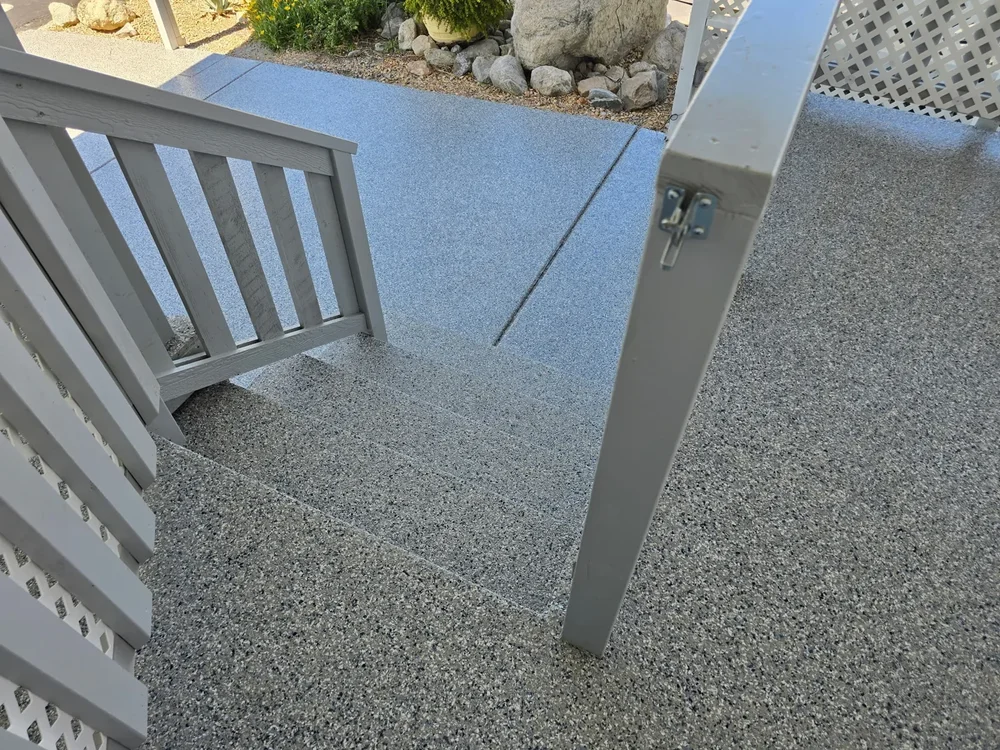
Coated garage floors get slippery because the topcoat is smooth and glossy. Add grip with a full flake broadcast, an aluminum oxide anti-slip additive in the topcoat, or a quartz broadcast for maximum traction, and consider a satin finish. On an existing floor, scuff-sand and roll a new topcoat with grit. More texture means a little more effort to clean.
Why coated garage floors get slippery
- Smooth, high-gloss topcoats. Epoxy and polyaspartic self-level into a very flat film. That's what makes them easy to clean and what makes them slick.
- Contaminants. Water tracked in on tires, fine dust, oil drips, and soap residue from mopping sit on top of a non-porous floor instead of soaking in.
- Where people walk. The step down from the house, the laundry or water heater corner and the strip where wet cars drip are the usual problem spots.
Four ways to add grip
| Method | Grip | Cleaning | Best for |
|---|---|---|---|
| Full flake broadcast | Moderate | Easy | Most garages; texture plus hidden dirt |
| Aluminum oxide in topcoat | Moderate to high (by grit) | Easy to moderate | Adding grip to any coated floor |
| Quartz broadcast system | Highest | Harder | Wash bays, shops, wet areas |
| Satin finish topcoat | Slight | Easy | Pairs with any of the above |
1. Full flake broadcast
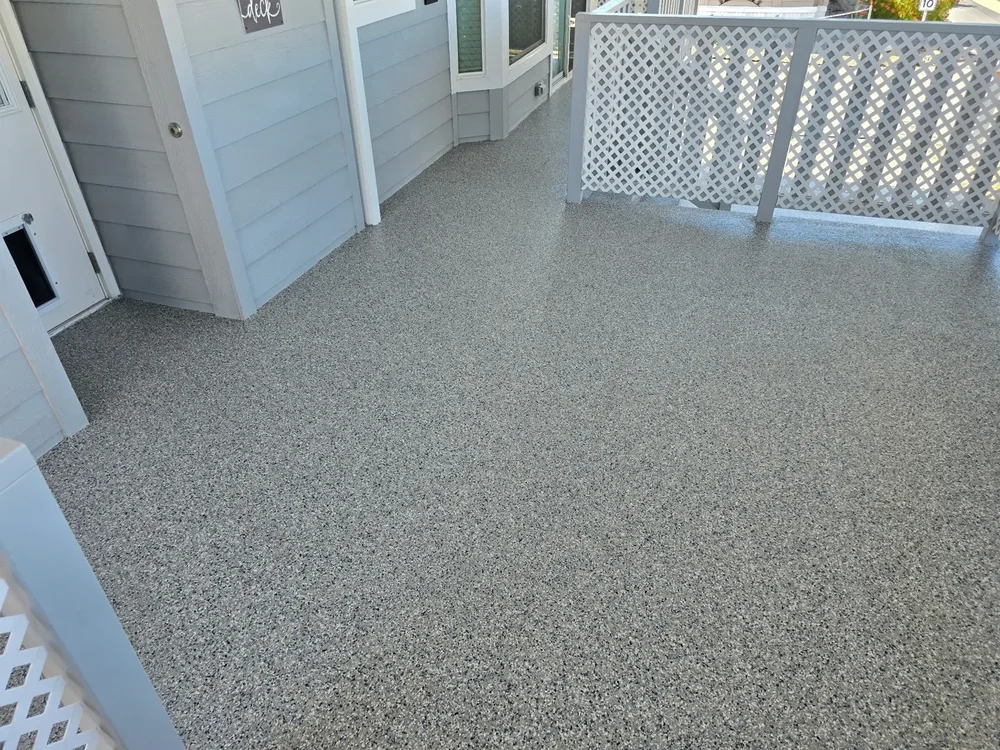
A full-broadcast flake floor has a subtle texture from the chips under the topcoat. It's noticeably grippier than a smooth solid-color floor and hides dust and tire marks, which is a big part of why it's our most-installed garage system.
2. Aluminum oxide anti-slip additive
Aluminum oxide is a very hard grit that's mixed into the clear topcoat or broadcast into it while wet, then locked in. Finer grits give a light sandpaper feel that's still easy to mop; coarser grits give more traction. We stock Kretus Anti-Slip in aluminum oxide, bead and texture versions. It's an inexpensive add-on to a new floor and the standard fix for an existing one.
3. Quartz broadcast
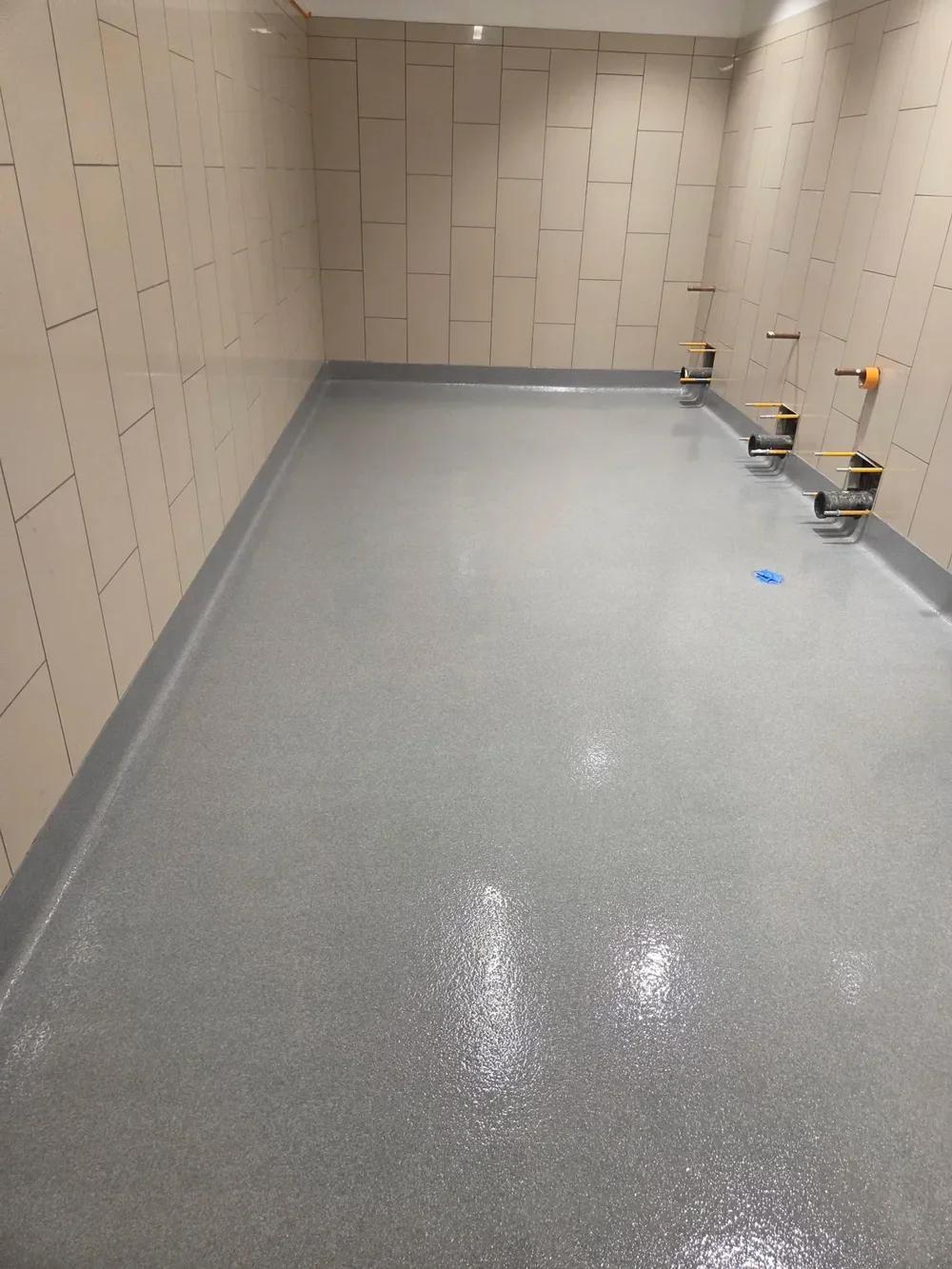
Colored quartz sand broadcast into epoxy and sealed is the most slip-resistant resin floor there is. It's what commercial kitchens and wash areas use. In a home garage it's usually more texture than you need, unless you wash cars or equipment in there regularly.
4. Satin instead of high gloss
A satin topcoat doesn't add much traction on its own, but it reduces glare and shows less dust, and it pairs well with flake or grit.
Zone it. You don't have to make the whole floor sandpaper. Many owners use a fine grit across the floor and a heavier grit at the house entry, the step, around the laundry or water heater, and where the car drips.
Making an existing coated floor less slippery
- Check the coating is sound. If it's peeling or lifting at the tire lines, that needs to be fixed first. (Garage floor resurfacing.)
- Degrease and clean thoroughly. Any oil or silicone left on the floor will stop the new coat from bonding.
- Scuff-sand the existing topcoat so the new layer can grab, then vacuum.
- Roll a compatible clear topcoat with anti-slip additive mixed in or broadcast into it, back-rolling for even texture. Check the topcoat's data sheet for compatibility and recoat windows.
- Let it cure fully before parking on it.
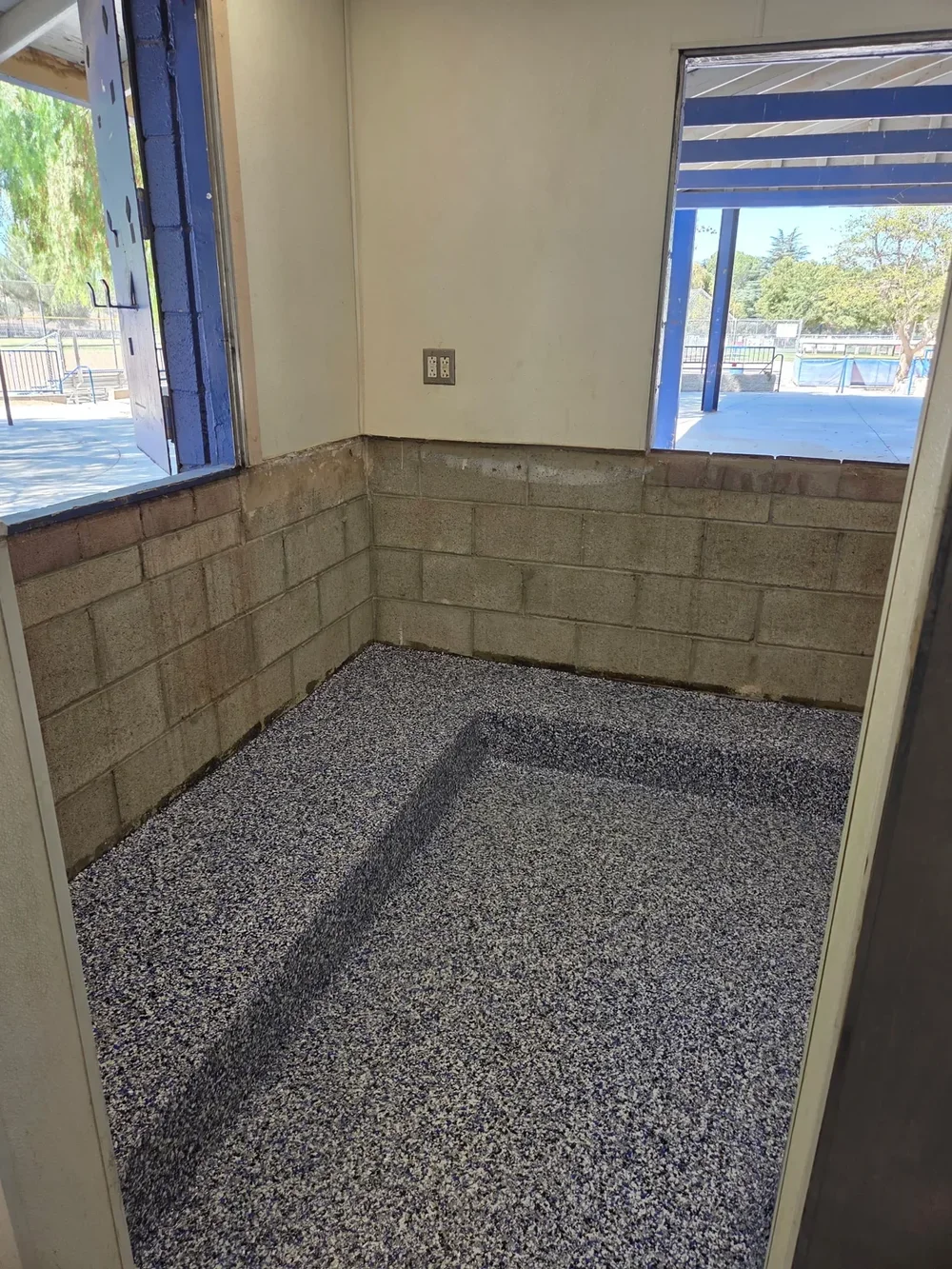
We can do this for you, or sell you the material and walk you through it at our Corona counter.
Keeping it non-slip
- Dry-mop or blow out dust regularly; fine dust on a coated floor is a big slip factor.
- Wipe up oil and coolant right away.
- Mop with a pH-neutral cleaner and rinse. Soap residue builds a slick film.
- A mat at the house door catches water before it hits the floor.
Frequently asked questions
How do I make my epoxy garage floor less slippery?
The most reliable fix is a new topcoat with an anti-slip additive such as aluminum oxide mixed or broadcast into it. On an existing floor that means cleaning and lightly abrading the current coating, then rolling a fresh topcoat with grit. Keeping the floor clean of dust, oil and tire residue also makes a big difference.
What is the best anti-slip additive for a garage floor?
Aluminum oxide is the standard. It is very hard, stays sharp under traffic and is mixed into or broadcast over the topcoat. Finer grits give a subtle texture that is easy to clean; coarser grits give more grip but hold dirt. Polymer beads are a softer, barefoot-friendly option.
Is a flake garage floor slippery?
A full-broadcast flake floor has more texture than a smooth solid-color floor, so it is less slippery, but a high-gloss topcoat over flake can still be slick when wet or dusty. Adding aluminum oxide to the topcoat is a small extra cost for noticeably more grip.
Will anti-slip grit make my garage floor hard to clean?
Somewhat. More texture means a mop drags a little more and dirt sits in the low spots. A fine grit, a microfiber or soft-bristle mop and a pH-neutral cleaner keep it manageable. Many owners put heavier grit only where they need it: the entry from the house, the step down, around the water heater or laundry, and under the car's drip line.
Can I add anti-slip to an existing coated garage floor?
Yes. Clean and degrease the floor, scuff-sand the existing coating so the new layer can bond, then roll a compatible clear topcoat with anti-slip additive. If the existing coating is peeling, that has to be fixed first or the new topcoat will fail with it.
Is polyaspartic or epoxy more slippery?
Slip resistance comes from texture and finish, not the resin. A smooth, high-gloss polyaspartic and a smooth, high-gloss epoxy are both slick when wet. A satin finish, flake broadcast or grit in the topcoat is what changes it.
Want a garage floor with real grip?
We install flake and polyaspartic garage floors with anti-slip built in, and add grit to existing floors. Free estimates across Southern California.
Free EstimateShop Anti-Slip