
Getting Your Floors Ready for. the School year:
Why Epoxy and Concrete Overlay Floors Make Every summer, facility managers across Southern California face the same countdown: a few short weeks to get campuses cleaned, repaired, and upgraded before thousands of students pour back through the doors. And no surface takes more of a beating during the school year than the floors.
Hallways, cafeterias, gymnasium lobbies, science labs, locker rooms, kitchens, multipurpose rooms — school floors absorb constant foot traffic, rolling carts, dropped trays, spilled drinks, cleaning chemicals, and the occasional scooter that was definitely not supposed to be indoors. Traditional flooring options like VCT tile and carpet simply weren't built for that kind of abuse. They stain, chip, peel, and demand endless waxing and stripping just to look presentable.
That's why more schools are turning to epoxy flooring and decorative concrete overlays — two systems purpose-built to handle institutional wear while looking better than anything they replace. Here's why they belong on your summer project list.
The Summer Window: Why Fast Turnaround Matters
School flooring projects live and die by the calendar. You can't shut down a main corridor in October. The work has to happen during summer break, winter break, or a long weekend — and it has to be done when students return.
Epoxy and overlay systems are ideal for these tight windows:
Rapid installation. A trained crew can grind, prep, and coat thousands of square feet in days, not weeks. Multi-classroom or full-corridor projects routinely fit inside a single summer break.
Fast cure options. Modern polyaspartic topcoats and fast-set epoxy systems can return a floor to foot traffic in as little as 24 hours, with full chemical and abrasion resistance following shortly after. For phased projects, that means crews can move wing to wing without idle days.
No demolition required. Concrete overlays go directly over existing concrete — and in many cases over old, damaged slabs that would otherwise need costly replacement. Cracks, spalls, and worn surfaces get resurfaced, not ripped out. Less demo means less dust, less disruption, and less money.
Compare that to tile replacement (demo, hauling, adhesive cure times) or terrazzo (beautiful, but slow and expensive), and the scheduling math strongly favors coatings.
Built for the Long Haul: Life Expectancy That Outlasts the Alternatives
A properly installed epoxy or overlay floor isn't a quick fix — it's a long-term asset.
15–20+ years of service life is realistic for a professionally prepped and installed epoxy system in a school environment, with simple recoats extending that even further.
Concrete overlays become part of the slab. Once bonded and sealed, an overlay performs like new concrete — measured in decades, not replacement cycles.
No wax, ever. Unlike VCT, which demands stripping and waxing multiple times a year, coated floors maintain their finish with routine mopping and an occasional auto-scrubber pass. Over a 10-year period, the maintenance savings alone often exceed the original installation cost.
For districts managing dozens of buildings on tight maintenance budgets, that lifecycle value is the real headline.
Durability Where Schools Need It Most
Different campus spaces punish floors in different ways — and these systems handle all of it:
Hallways and common areas: High-build epoxy and urethane topcoats resist scuffing, gouging, and the daily churn of thousands of footsteps.
Cafeterias and kitchens: Seamless, non-porous surfaces shrug off food acids, grease, and hot spills, and stand up to aggressive daily sanitizing.
Science labs and art rooms: Chemical-resistant formulations handle solvents, dyes, and reagents that would permanently stain tile grout or VCT.
Locker rooms and restrooms: Waterproof, seamless systems with integral cove base eliminate the grout lines and seams where moisture and odor live.
Gym lobbies and multipurpose rooms: Impact-resistant broadcast systems take dropped equipment, folding tables, and stacked chairs in stride.
Safety and Cleanliness: The Qualities Administrators Care About
Beyond durability, epoxy and overlay floors check the boxes that matter to school boards, facilities directors, and parents:
Slip resistance you can dial in. Aggregate broadcast into the topcoat creates a textured, slip-resistant finish rated for wet areas — critical for entries, kitchens, and locker rooms.
Seamless and hygienic. No grout lines, no seams, no carpet fibers. There's nowhere for bacteria, allergens, mold, or odors to hide, and spills wipe up completely.
Low-VOC and low-odor options. Modern water-based and 100%-solids systems meet indoor air quality requirements for occupied educational buildings.
Brighter spaces. Light-reflective finishes bounce illumination around hallways and classrooms, improving visibility and even reducing lighting costs.
A Look That Makes an Impression
Floors are one of the largest visual surfaces on any campus — and epoxy and overlay systems turn them into a design feature instead of an afterthought:
School colors, built in. Solid colors, decorative flake blends, and metallic finishes can match your school's palette exactly.
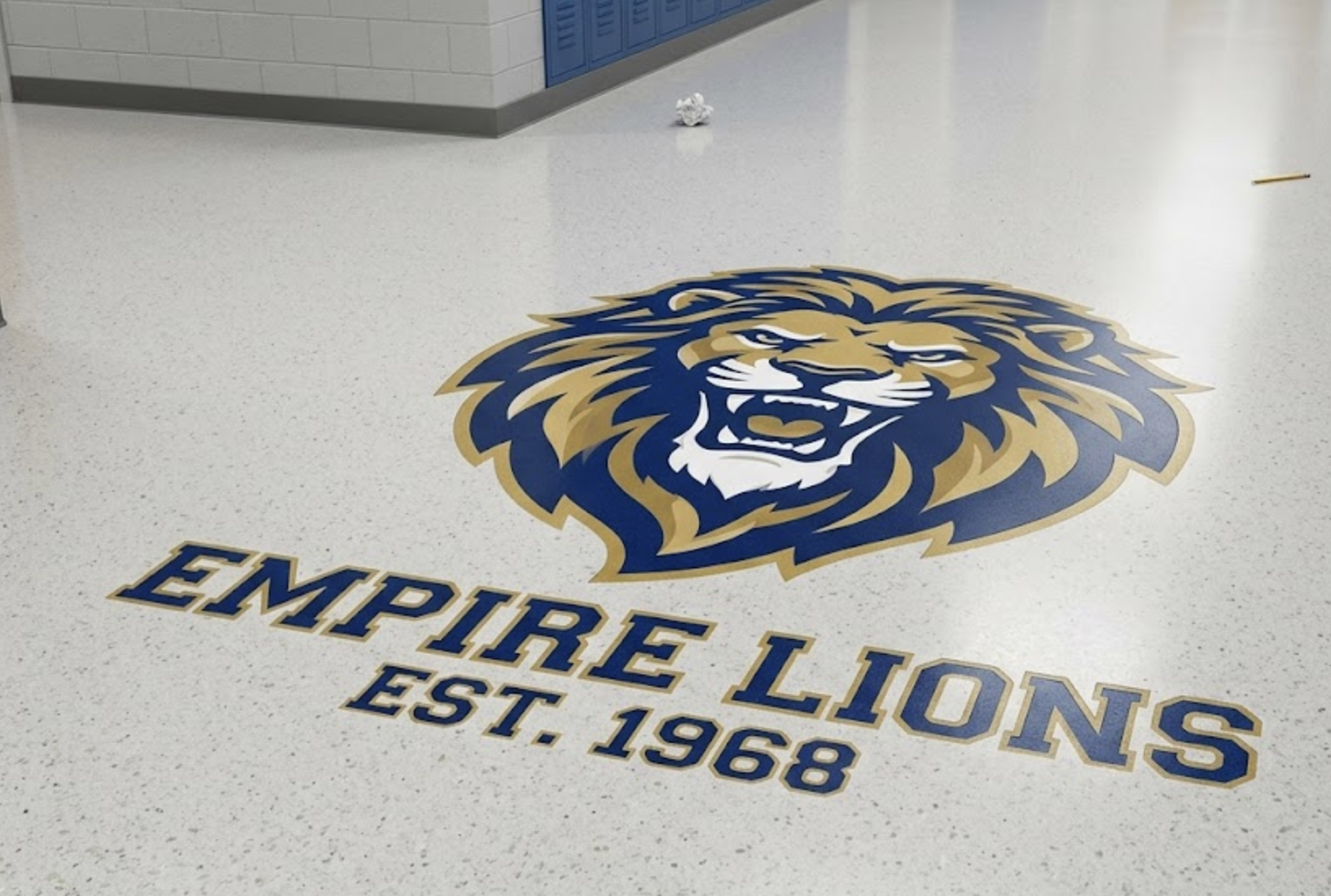
Logos and graphics. Mascots, crests, wayfinding stripes, and safety zones can be embedded directly into the floor — permanent, not painted-on.
Polished-concrete and stone aesthetics. Decorative overlays can mimic polished stone, terrazzo, or stained concrete at a fraction of the cost.
A first impression that lasts. A gleaming, seamless entryway floor tells students, parents, and visitors that the campus is cared for — and it still looks that way in June.
Epoxy vs. Concrete Overlay: Which Is Right for Your School?
Choose epoxy coatings when the existing slab is in decent shape and you need maximum chemical resistance, decorative flake or metallic finishes, and the fastest possible turnaround — ideal for labs, kitchens, cafeterias, locker rooms, and corridors.
Choose a concrete overlay when the slab is cracked, spalled, uneven, or worn — or when you want a polished-concrete or terrazzo-style aesthetic. Overlays restore the surface itself, then take a protective sealer or coating on top.
Many campuses use both: overlays to rescue damaged slabs, epoxy systems to protect and beautify everything else. A site walk with an experienced installer is the fastest way to map the right system to each space.
Make This the Year Your Floors Stop Being a Maintenance Problem
The best school flooring project is the one nobody thinks about after installation — no waxing schedules, no cracked tiles, no stained carpet. Just clean, bright, durable floors that are ready for everything the school year throws at them.
If your campus is in Southern California, summer scheduling fills up fast. Contact Empire Coating Solutions today for a free site evaluation and quote — we'll assess your slabs, recommend the right system for each space, and build an installation schedule that has every floor finished, cured, and ready before the first bell rings.
