
Epoxy vs. Polyaspartic: Which Coating is Right for Your Garage/Patio Floor in Corona, CA?
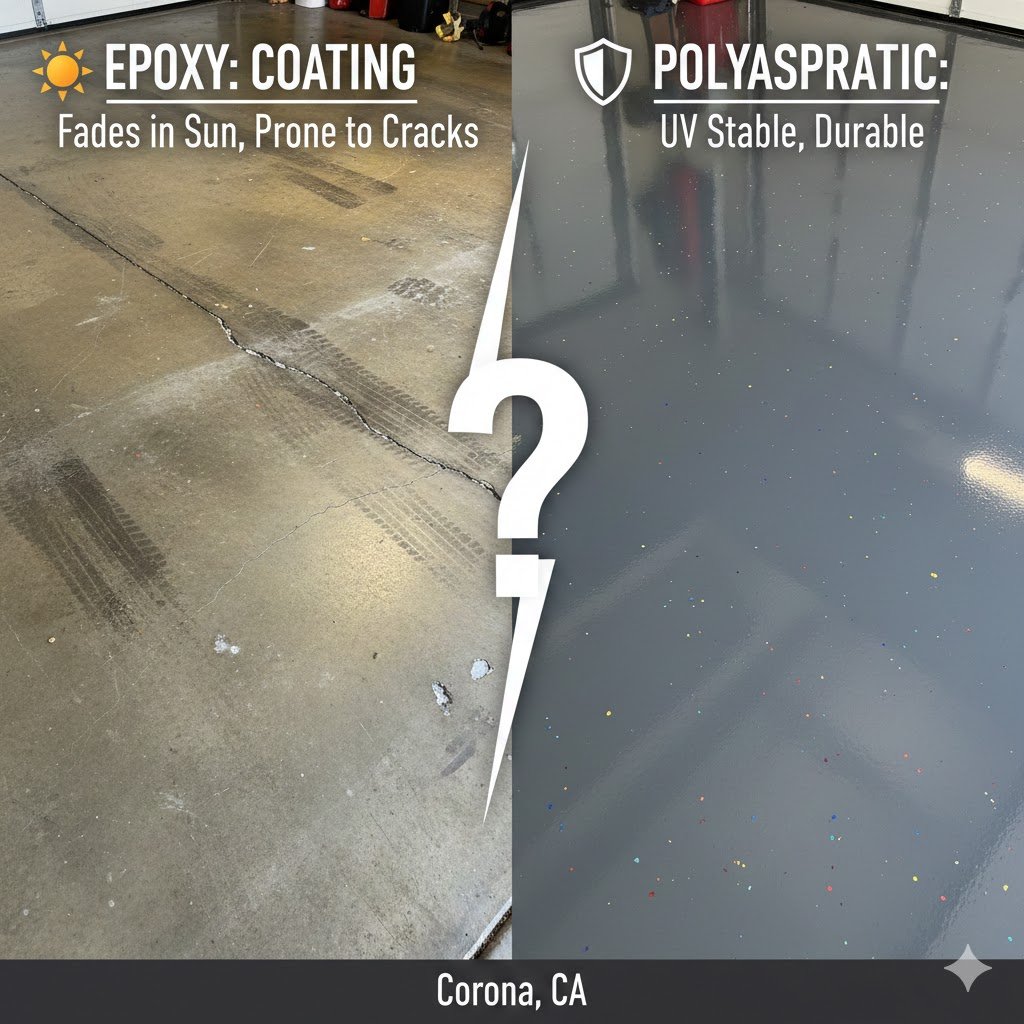
Choosing the right concrete coating in an area like Corona, with its intense sun and temperature fluctuations, is crucial for longevity. While both epoxy and polyaspartic coatings offer significant protection and visual appeal, Polyaspartic coatings are generally the superior choice, especially for outdoor patios and sun-exposed garage floors.
The best solution often involves a Hybrid System, using an epoxy or polyurea base coat for deep adhesion, topped with a polyaspartic topcoat for maximum durability.
Head-to-Head Comparison for Corona's Climate
UV Resistance (Sunlight) Prone to yellowing/fading ("ambering") under prolonged UV exposure. Not ideal for outdoors.
Excellent UV stability. Does not yellow or fade, maintaining its color and gloss.
Polyaspartic Cure Time Can take 16-24 hours per coat, meaning a multi-day installation and a week before full use. Rapid cure time (often less than an hour). Projects can often be completed in a single day.
Polyaspartic Temperature Tolerance Can become brittle in the cold and soft/vulnerable to "hot tire pickup" in extreme heat.More flexible and less affected by temperature shifts, preventing cracks and delamination.
Polyaspartic Flexibility & Durability Rigid and harder; can be prone to cracking, chipping, and scratching over time. More flexible and elastic; less prone to cracking from concrete movement and offers superior abrasion resistance.
Polyaspartic Chemical & Stain Resistance Good resistance to oils and spills. Excellent resistance to most chemicals, gasoline, and solvents. Polyaspartic Cost Generally the lower initial cost option. Higher initial cost due to premium materials and faster-curing installer skill requirements.
Why Polyaspartic Coatings Excel in Southern California
For a homeowner in Corona, the key differentiating factors—UV stability and temperature tolerance—heavily favor polyaspartic coatings for longevity and appearance.2
Patio and Outdoor Surfaces: For any area exposed to direct sun, such as a patio, pool deck, or driveway, polyaspartic's UV stability is non-negotiable. Traditional epoxy will yellow and degrade rapidly, while polyaspartic will retain its color and shine for years.
Garage Floors (Hot Tire Pickup): When you drive a car in Corona's summer heat, the tires get extremely hot. When you park, this heat can cause standard epoxy coatings to soften and delaminate from the concrete—a phenomenon called "hot tire pickup." Polyaspartic coatings handle high heat much better, eliminating this common issue.
Faster Return to Service: With a polyaspartic system, you can often walk on the floor the same day and drive on it the next, minimizing the disruption to your routine compared to the days-long curing process of epoxy.
Recommendation: The Hybrid System
Many professional coating companies, serving areas like Corona, utilize the best of both worlds by installing a Hybrid System:
Epoxy/Polyurea Base Coat: Applied first to provide excellent, deep-penetrating adhesion (bond strength) to the concrete.
Polyaspartic Topcoat: Applied over the base coat and decorative flakes to provide the final layer of UV stability, flexibility, and chemical/scratch resistance.
This combination leverages the superior bonding properties of the base coat with the superior performance characteristics of the polyaspartic topcoat, creating a floor that is both durable and long-lasting for the Corona climate.
Ready to See Samples? Visit Our Corona Showroom and Get a Free Estimate!
