
Why Your Surface Prep Is Costing You More Than Your Materials
Category: Trade Tips & Training | Estimated Read Time: 5 min
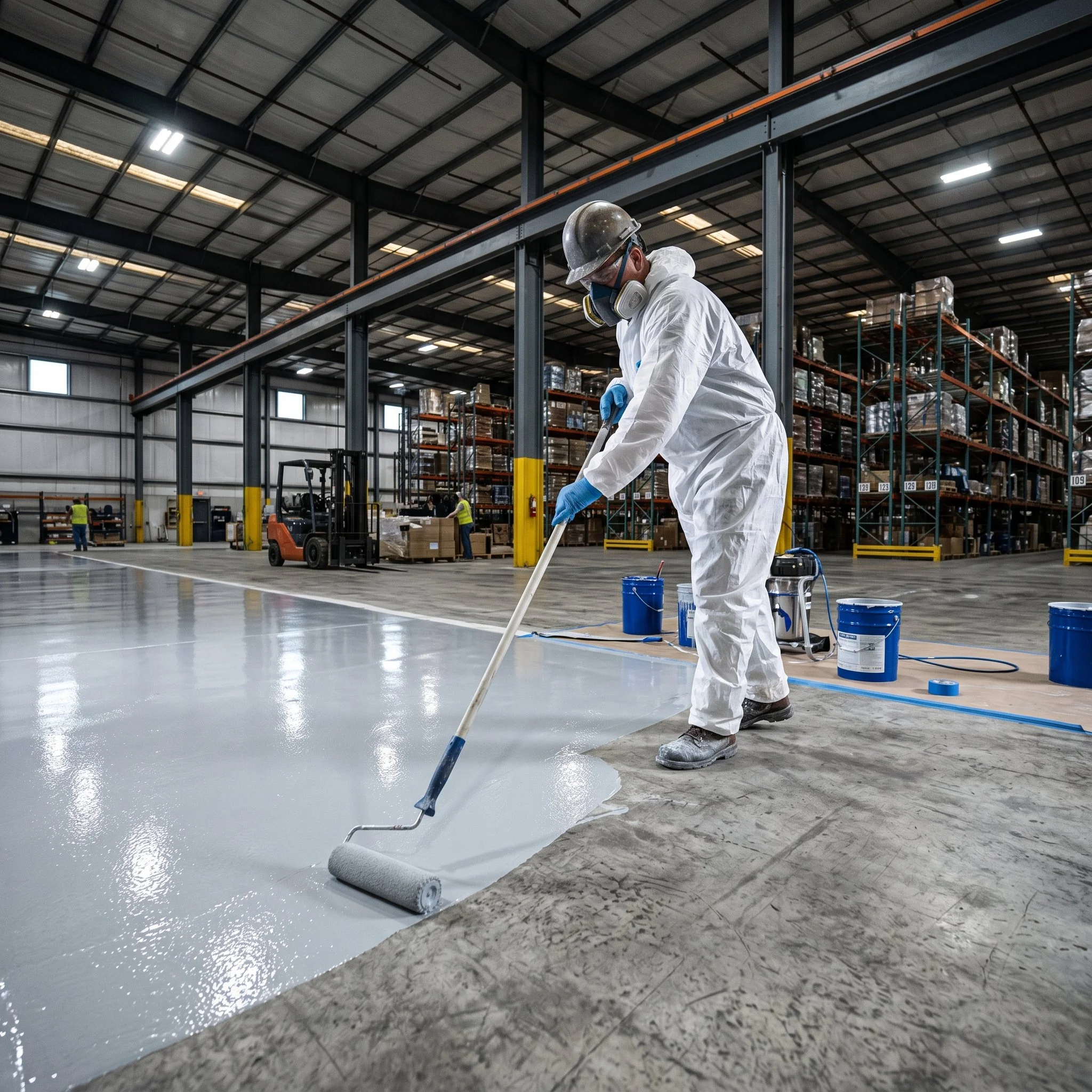
Ask any experienced flooring contractor where jobs go sideways and they'll tell you the same thing: it almost never fails at the product level. The epoxy didn't delaminate because the epoxy was bad. It delaminated because the concrete wasn't ready for it.
Surface preparation is the least glamorous part of this trade and the single biggest driver of call-backs, warranty claims, and lost reputation. If you're looking to grow a flooring business in Southern California — one of the most competitive and climate-challenging markets in the country — this is where the conversation starts.
The Prep Variables That Actually Matter
Moisture vapor emission. This is the silent killer. Concrete slabs in Southern California — especially on grade in older construction — can emit significant moisture vapor even when they feel bone dry to the touch. An MVT test isn't optional on any slab of unknown history. Coating over a high-emission slab without a vapor mitigation primer is a warranty claim waiting to happen.
Surface profile (CSP). Different coating systems require different concrete surface profiles. A thin broadcast flake system needs a CSP of 2–3. A urethane cement system going into a commercial kitchen needs a CSP of 4–5. If your grinder isn't opening the surface to the right depth and the right texture, the bond is compromised from the first coat. Diamond tooling selection matters. Shot blasting vs. grinding matters. Knowing which to use and when separates professionals from hobbyists.
Crack and joint treatment. Routing and filling working cracks before coating is non-negotiable. But knowing the difference between a working crack (one that will continue to move) and a dormant crack — and treating each differently — is what keeps your topcoat intact five years down the road. Joint filler selection and hardness rating needs to match the expected traffic load.
Contamination. Old adhesive, curing compounds, hardeners, form release agents — any of these will block mechanical adhesion. Chemical testing of the slab surface is a skill most contractors skip. Don't be most contractors.
The Southern California Factor
Working in the Inland Empire, Orange County, and greater LA comes with specific variables that contractors from other regions underestimate.
UV exposure is intense. Topcoat selection matters enormously here — an aliphatic polyaspartic will hold its color and clarity in direct sun; a standard epoxy topcoat will chalk and yellow within a season. If you're not spec'ing UV-stable topcoats on any exterior or sun-exposed application, you're selling your clients a problem.
Temperature swings also affect your open time and cure windows. A product that behaves one way at 65°F on a cloudy January morning behaves very differently at 90°F in a Corona warehouse in August. Understanding how ambient temperature, substrate temperature, and dew point interact with your specific products is what keeps your jobs going down clean.
Systems Worth Knowing
Most of the residential market lives in epoxy flake and polyaspartic systems. But there's a growing commercial and industrial segment in Southern California — food processing, commercial kitchens, aircraft hangars, fire stations — where urethane cement and MMA systems are the only appropriate answer.
Urethane cement handles thermal shock, moisture, and chemical exposure at a level standard epoxy can't touch. MMA (methyl methacrylate) offers cure times measured in hours, not days, which makes it ideal for commercial environments that can't afford extended downtime. These aren't products you learn on a YouTube video — they require hands-on training and proper protective equipment.
The Training Piece
Empire Coating Solutions runs a two-day intensive training program out of our Corona facility designed specifically for contractors who want to move up-market. It covers surface preparation in depth, metallic and flake system application, polyaspartic topcoating, troubleshooting, and the business side of positioning as a premium installer.
The next session is June 25–26. Class size is limited intentionally — this is hands-on work, not a seminar.
If you're already doing residential work and want to get into commercial, or if you're new to the trade and want to start with the right foundation, this is where to start.
Learn more or register at socalecs.com/training. Questions? Call us at 909-272-5137.
Empire Coating Solutions | 284 Dupont Street, Suite B #155, Corona, CA | socalecs.com
